Certificate
Characterisation of the Kingdoms of Life and the Evolution of Metabolic Systems from Archaea to Metazoans
Course Outline
This course introduces learners to the diversity of life on Earth, focusing on the classification of living organisms and the evolutionary development of metabolic systems. From simple prokaryotic organisms such as Archaea and Bacteria to complex multicellular Metazoans, students will explore how life forms are organized and how their metabolic processes have evolved over time.
The course examines the structural, functional and biochemical characteristics of each kingdom, with emphasis on energy acquisition, metabolic pathways and adaptation to different environments.
Learners will combine theoretical knowledge with case studies and comparative analysis to understand evolutionary relationships, metabolic diversity and the complexity of life systems.
Key Information
- MQF/EQF Level: Not pegged/recognised by MFHEA
- ECTS: N/A
- Qualification/Certification Type: Certificate of Completion
- Course Duration: 3 days
- Total Hours: 20 hours
- Delivery Mode: In-person
- Language of Instruction: English & French
- Target Audience: 18+ years
Students must complete at least 85% of total learning hours (tracked via attendance logs, class participation and assessment submissions). A Certificate of Completion will be issued accordingly.
Course Description
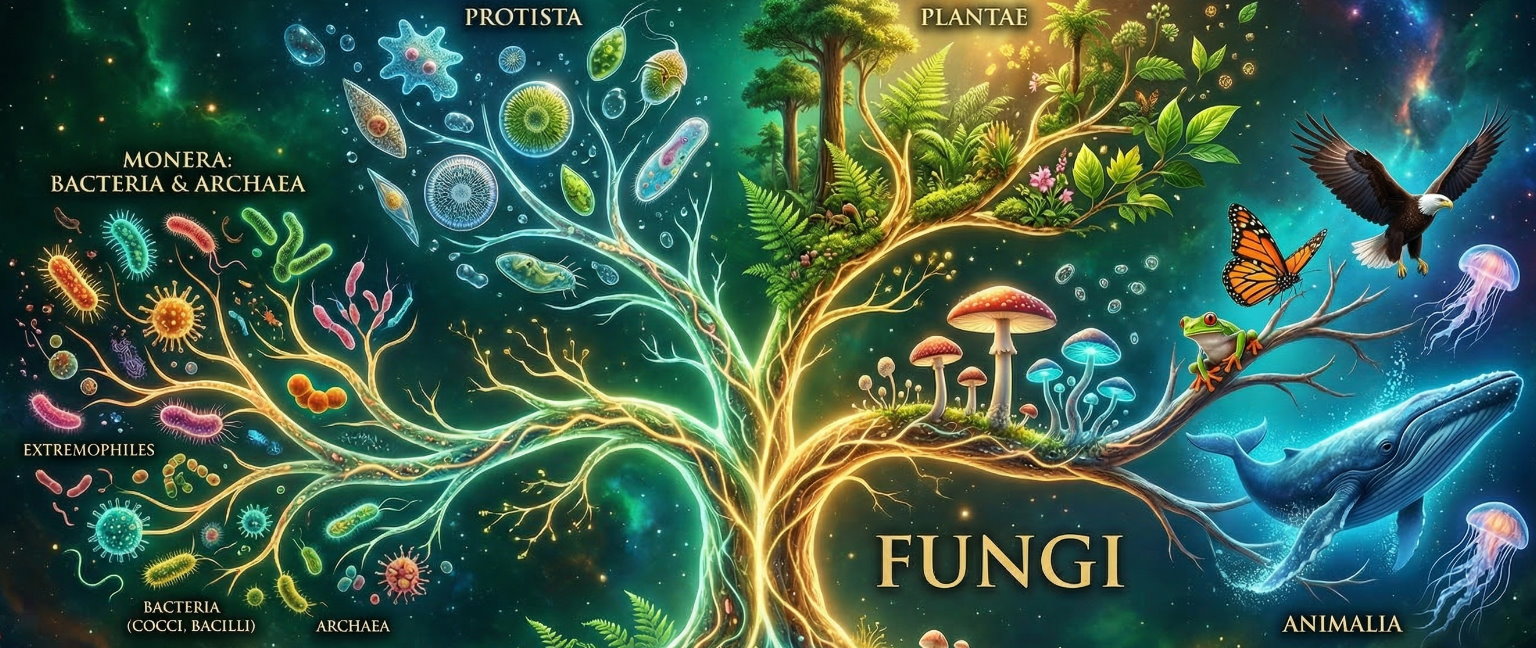
Life on Earth is extraordinarily diverse, ranging from simple single-celled organisms to complex multicellular animals. This unit explores how organisms are classified into kingdoms and how their metabolic systems have evolved to sustain life in different environments.
The course begins by introducing the fundamental characteristics of life and the principles of biological classification. Learners will explore the three domains of life, ie Archaea, Bacteria and Eukarya and examine how these groups differ in cellular structure, genetics and metabolism.
The unit then investigates metabolic processes, including autotrophic and heterotrophic pathways, aerobic and anaerobic respiration and photosynthesis. Special attention is given to how metabolic systems evolved in response to environmental changes such as oxygen availability and ecological pressures.
Learners will study each kingdom in detail – Archaea, Bacteria, Protista, Fungi, Plantae and Animalia – focusing on their defining traits, ecological roles and metabolic strategies. The course concludes with an exploration of the evolution of multicellularity and the increasing complexity of metabolic specialization in Metazoans.
Throughout the unit, learners will develop analytical skills to compare organisms, interpret evolutionary relationships and understand how metabolic diversity underpins life on Earth.
Entry Requirements
- Basic understanding of general biology concepts
- Familiarity with cell structure is recommended
Target Audience
This course is designed for:
- Biology students (tertiary level)
- Health and life sciences learners
- Environmental science students
- Laboratory assistants and technicians
- Individuals interested in microbiology and evolution
- Science enthusiasts seeking structured biological knowledge
Course Delivery
The programme is structured into eight modules, delivered through:
- Instructor-led lectures
- Interactive discussions
- Case studies and comparative analysis
- Visual presentations and diagrams
- Group activities
- Short assessments and quizzes
Course Structure
- Module 1 – Characteristics of Life and Biological Classification
- Module 2 – The Three Domains of Life (Archaea, Bacteria, Eukarya)
- Module 3 – Prokaryotic Life: Archaea and Bacteria
- Module 4 – Metabolic Systems: Energy, Enzymes and Pathways
- Module 5 – Eukaryotic Kingdoms: Protista and Fungi
- Module 6 – Plantae: Photosynthesis and Autotrophic Systems
- Module 7 – Animalia (Metazoans): Heterotrophy and Complexity
- Module 8 – Evolution of Metabolism and Multicellularity
- Final Assessment
Assessment & Certification
Assessment methods include:
- Practice quizzes
- Module-based assessments
- Short written assignments
- Final graded assessment
Upon successful completion, learners will receive a Certificate in Biological Classification and Metabolic Evolution.
Learning Outcomes
By the end of this course, learners will be able to:
- Describe the key characteristics of living organisms.
- Differentiate between the major kingdoms and domains of life.
- Explain the structural and functional differences between prokaryotic and eukaryotic cells.
- Identify and compare major metabolic pathways (e.g. respiration, photosynthesis).
- Explain how metabolic systems evolved in response to environmental changes.
- Analyse the relationships between organism complexity and metabolic specialization.
- Interpret basic evolutionary relationships among organisms.
- Apply classification principles to categorize living organisms.
Course Intake Dates & Pricing
May 2026 (to be confirmed)
Price: EUR 500
Advancing Education. Empowering Innovation.
Sign Up for Course Alerts
Get notified when new courses launch so you never miss a learning opportunity.